
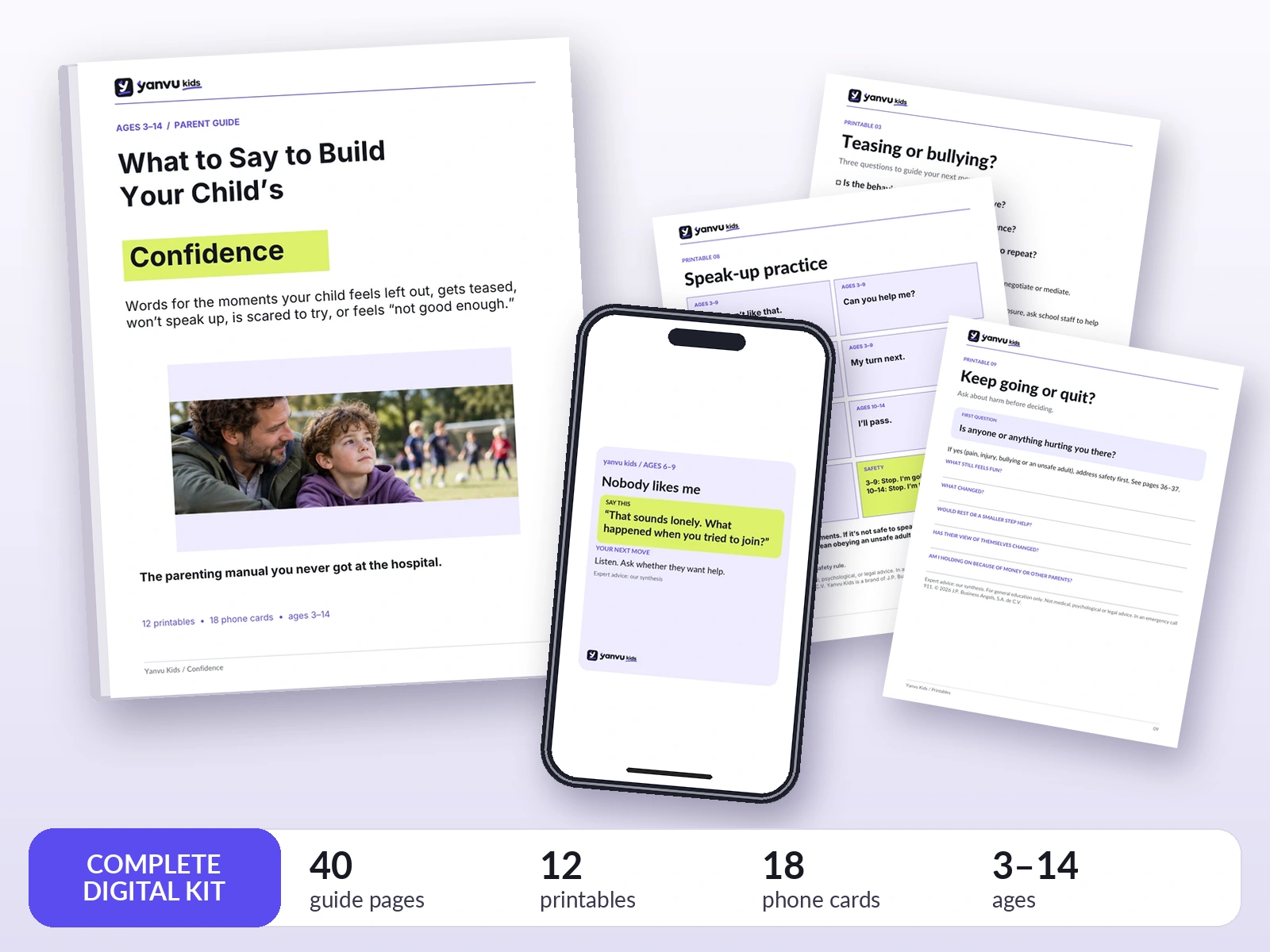
Actual pages and tools from your digital kit. Digital download only; nothing is shipped.
Ages 3‑14 · A guide for parents
★★★★★The parenting manual you never got at the hospital.
What to Say to Build Your Child’s Confidence.
Words for the moments your child feels left out, gets teased, won’t speak up, is scared to try, or feels “not good enough.”
No guide can make a child confident, popular or fearless. This one gives you the words for the moments that hurt.
14-day money-back guaranteeDigital download · No subscription
VISAPayPay 3D Secure
- 40-page guide for ages 3‑5, 6‑9 and 10‑14
- Words for 7 hard moments, from “Nobody likes me” to “I’m stupid”
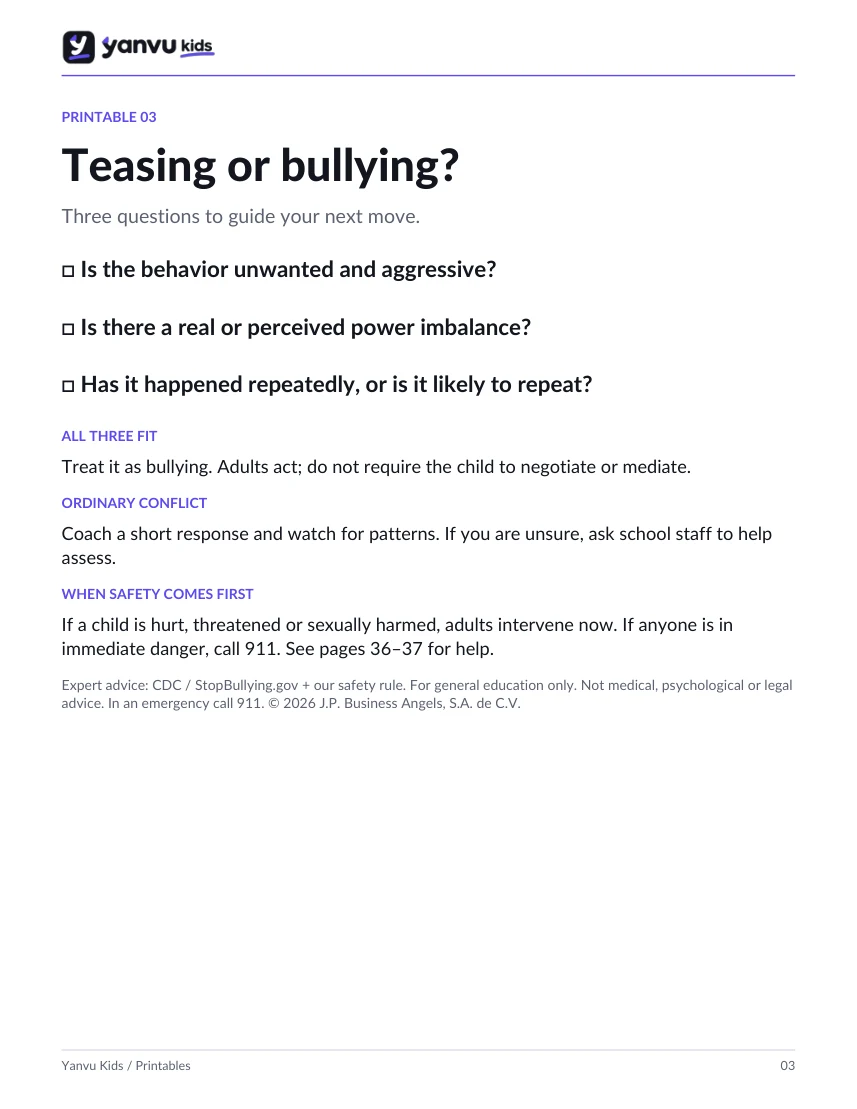
- A 3-question check: teasing or bullying?
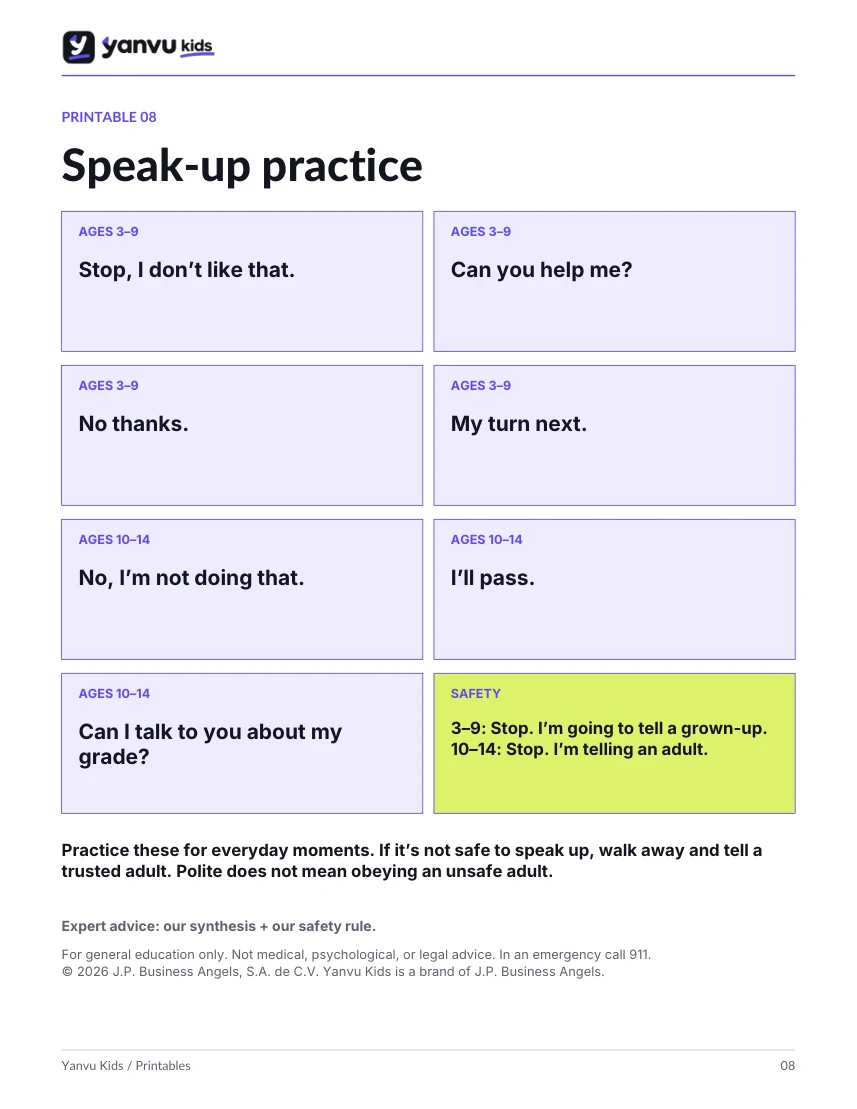
- Practice phrases for speaking up
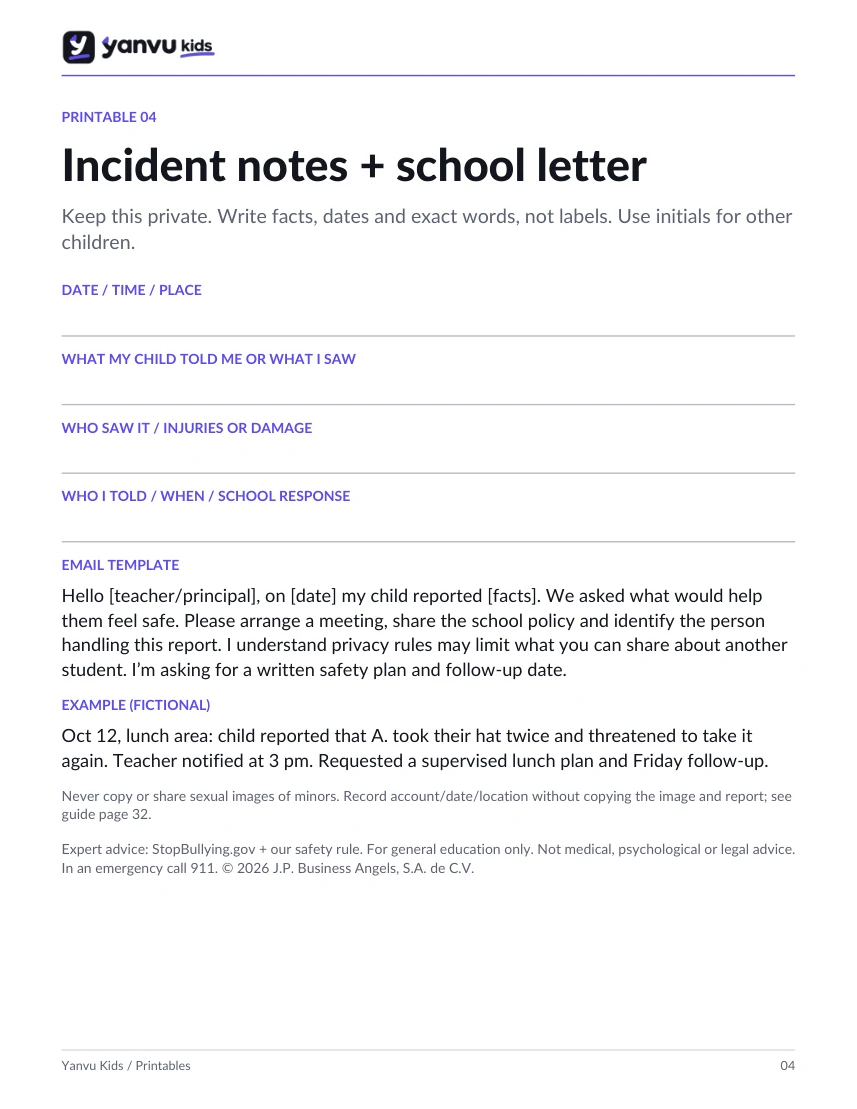
- 12 printables, including a school letter template
- 18 phone cards to save for the next hard moment
PARENT REVIEWS
What parents say
No one prepares you for these moments.
1 in 5
About 1 in 4 in middle school.
US students ages 12‑18 reported being bullied at school in 2021‑22.
National Center for Education StatisticsWhen it hurts you, too.
No one prepares you for the day your kid says “Nobody likes me.” Or “I can’t.” Or “I’m stupid.” It makes sense to feel upset when your child is hurting. You don’t have to solve it tonight. You just need the next thing to say.
Which moment is yours?
Choose an age and tap a moment to see the words you can use.

They laughed at me

Taking time to warm up

Speaking up

I can’t. I want to quit

I’m stupid

Making friends
Start with one line. The guide has the next steps for each moment.
Where should you start?
YOUR 2-MINUTE CHECK
Check situations from the past month. This is not a test or a diagnosis.
Nobody likes me
They laughed at me
Taking time to warm up
Speaking up
I can’t. I want to quit
I’m stupid
Making friends
Group chats and going quiet
If your child seems content and you’re the one worried, the guide has a section on that, too.
If your child is in danger, call 911. US crisis support: call or text 988.
Is this guide right for you?
This is for you if
- You never know what to say when your child is hurting.
- You want words that don’t make it worse.
- You want one small step, not a 12-week program.
- You have 5 minutes tonight.
It’s not for you if
You want a guarantee of popularity or fearlessness. You need a personalized diagnosis or treatment plan. You want a journal for your child to fill in.
What’s inside
Where to start
Choose a moment that matters to your family.
Words for hard moments
Age-specific phrases to use in the moment.
When they want to quit
A decision that puts safety and the child’s voice first.
Ages 10‑14
Words for a conversation when they go quiet.
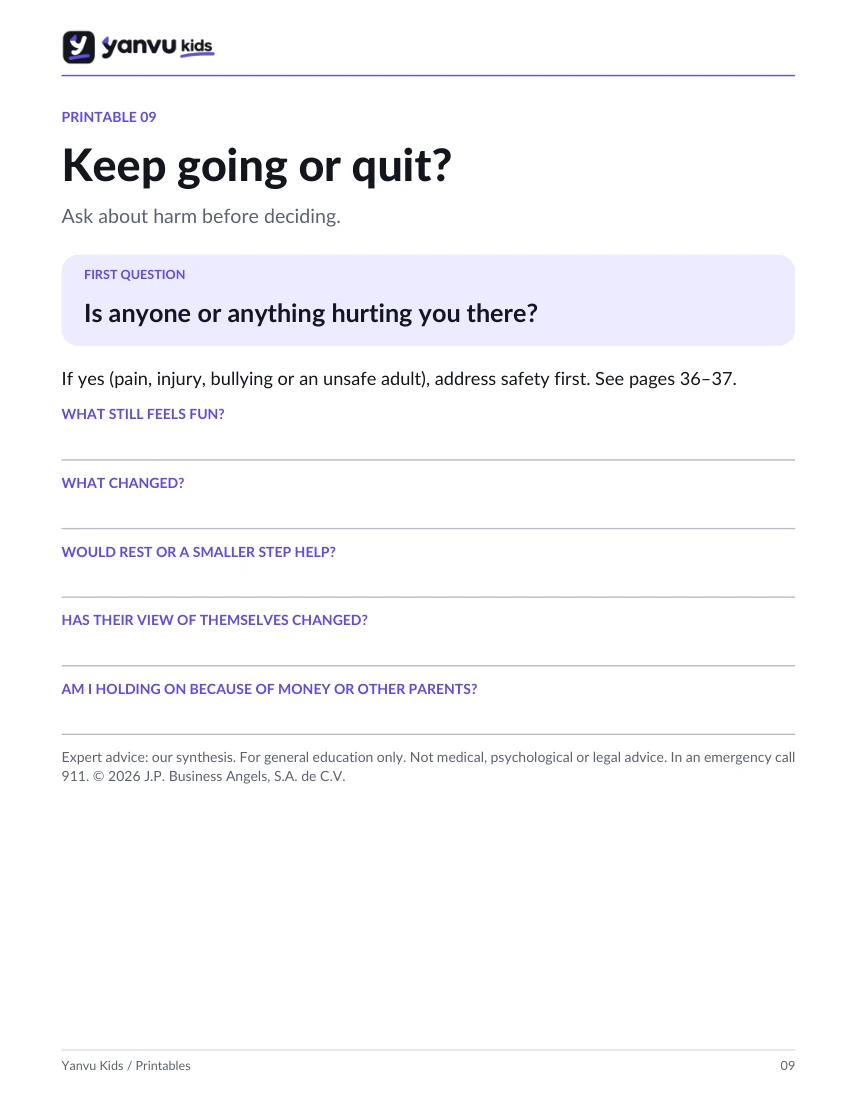
Keep going or quit?
A printable decision worksheet.
When to get help
US and Mexico resources.
One moment. Three practical pages.
See how the words turn into a real next step.
A MOMENT FROM THE GUIDE · SOCCER
CHILD
“I want to quit soccer.”
PARENT
“Is anyone or anything hurting you there?”
CHILD
“No. I’m always the worst.”
PARENT
“That sounds exhausting. Is it the game itself, the pressure, or something else?”
Illustrative conversation · actual guide, p. 21
WHAT TO DO NEXT
Check for harm before discussing commitment. Choose the next step together.
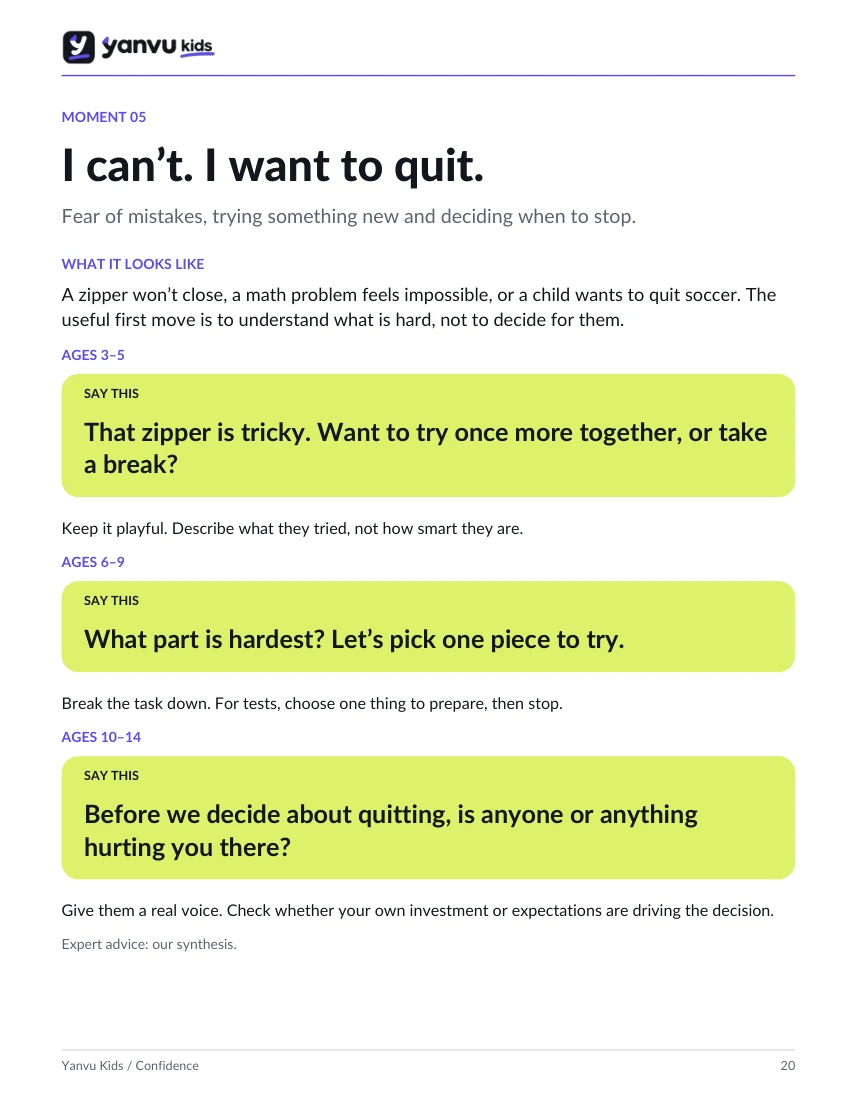
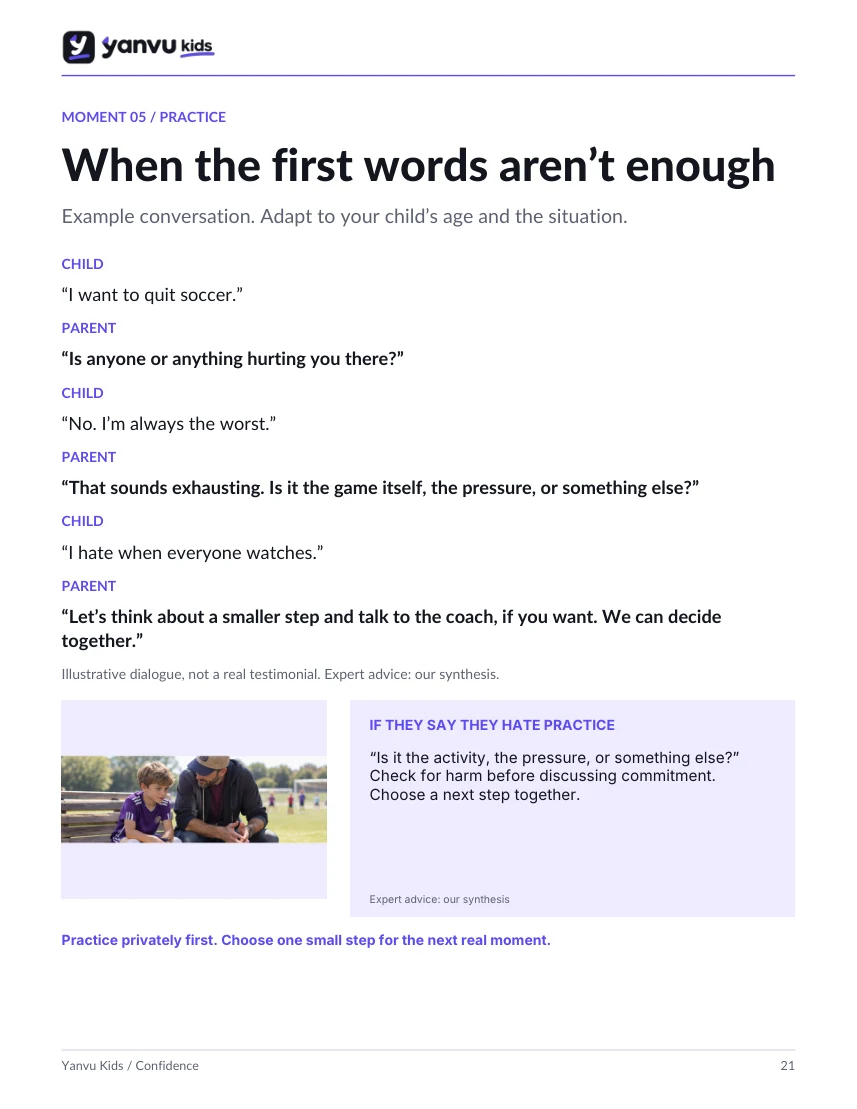
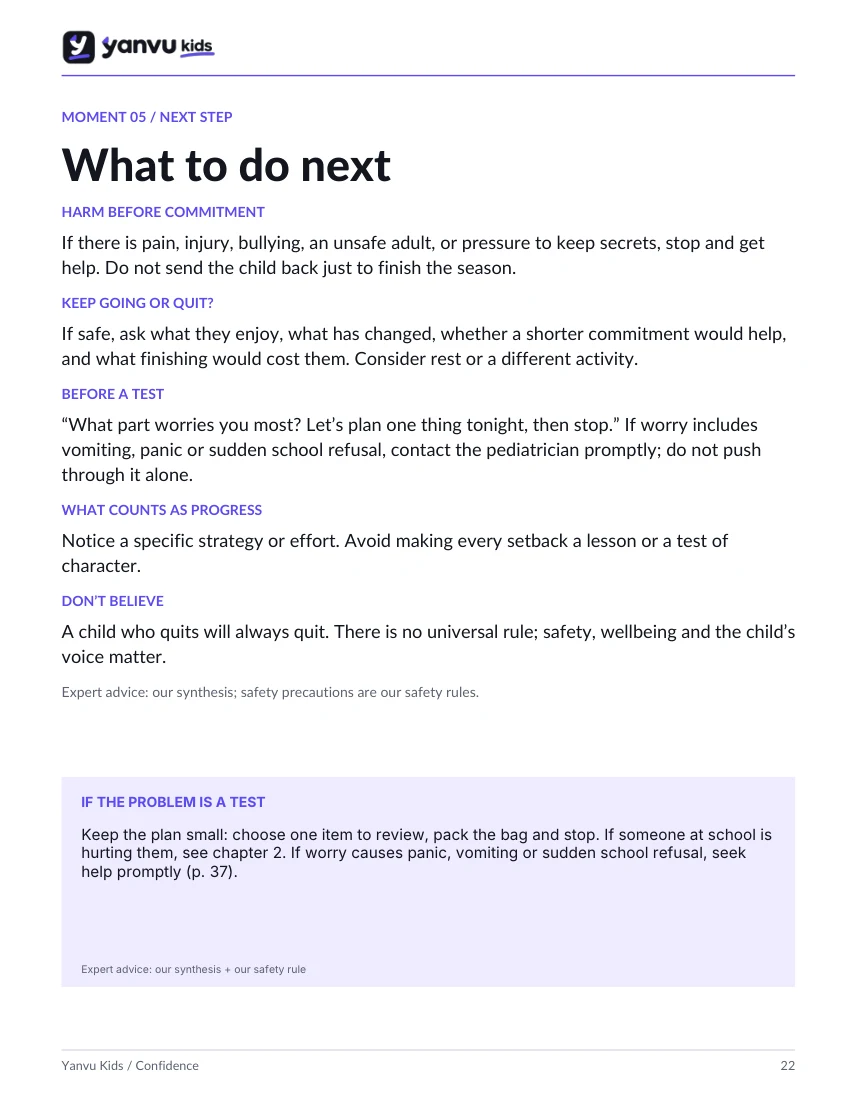
Pages 20‑22 · from the actual guide
Keep the words where you need them.
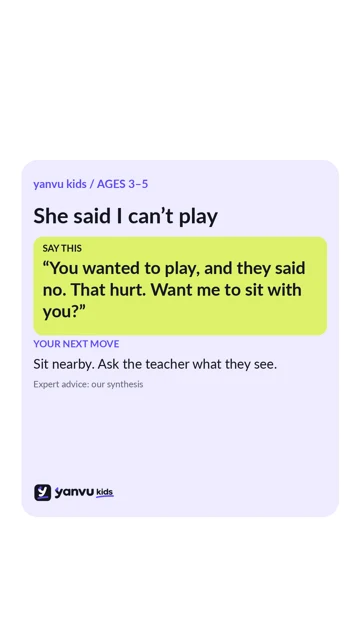
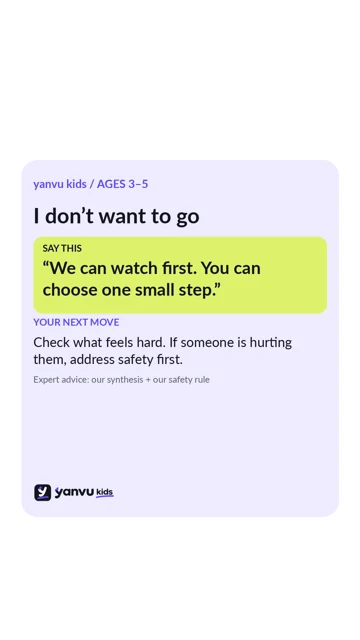
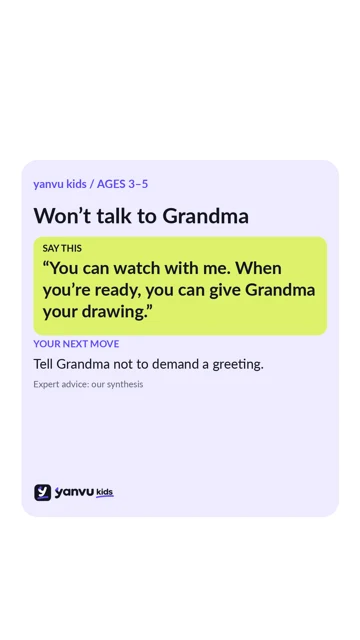
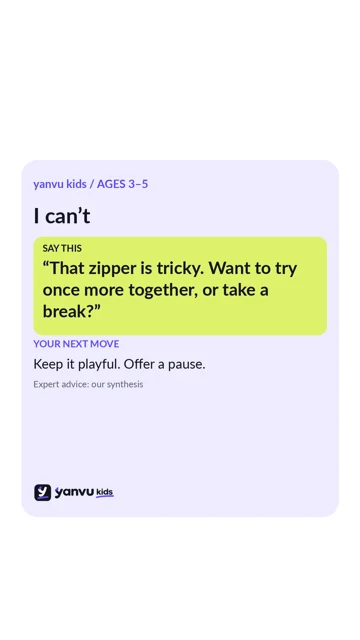
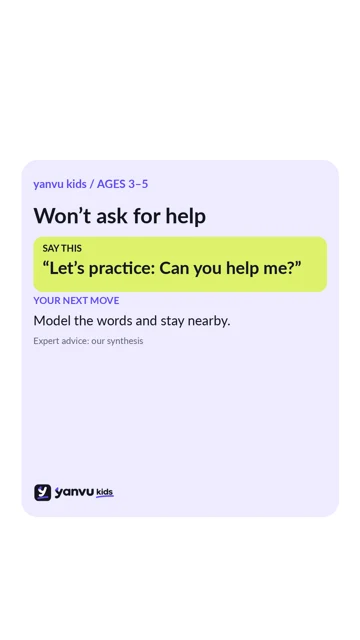
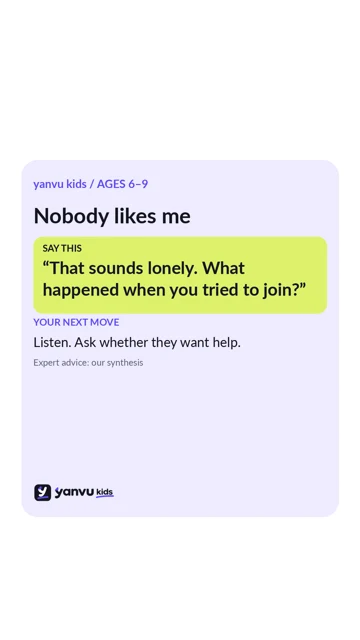
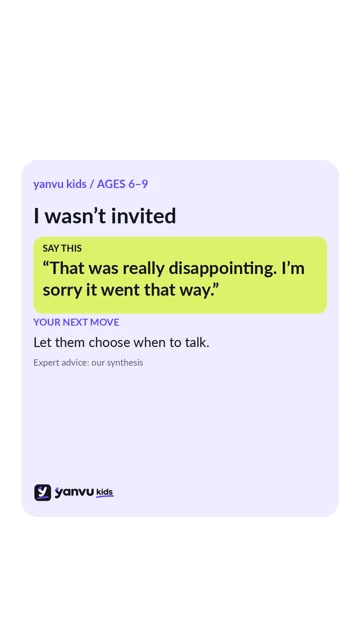
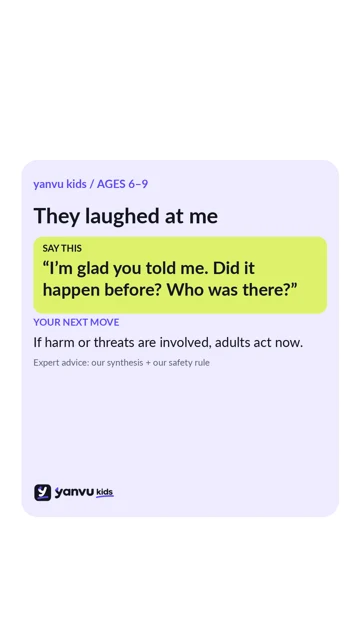
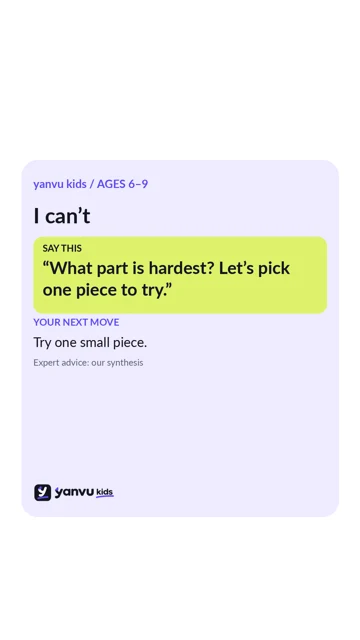
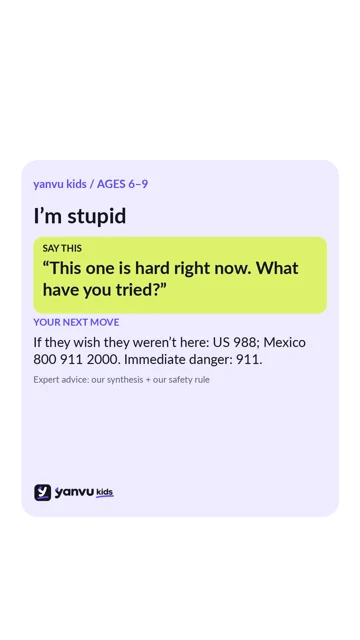
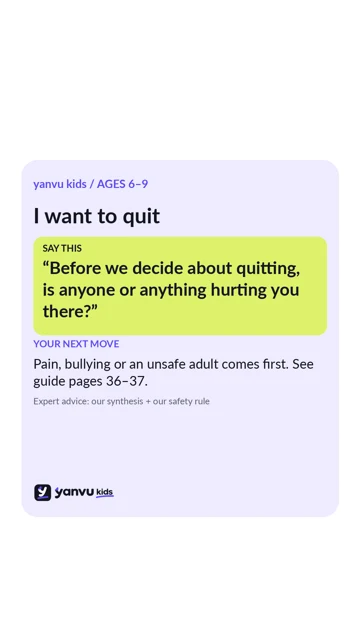
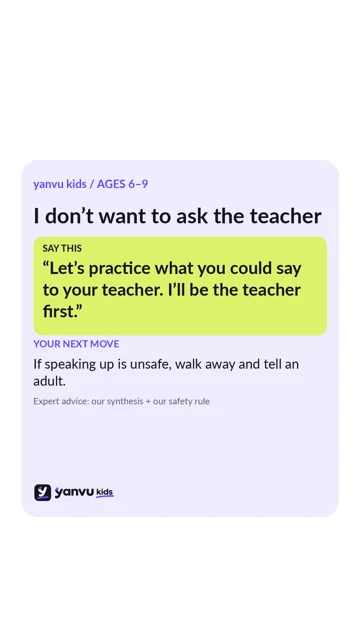
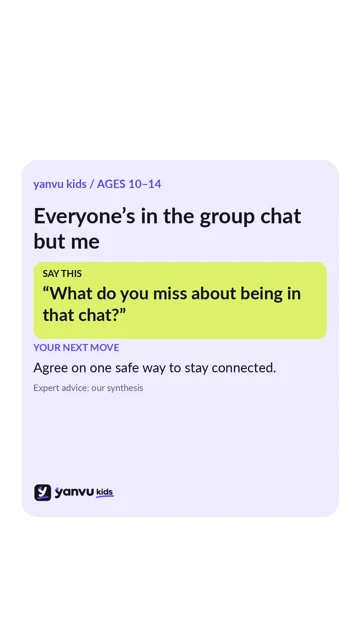
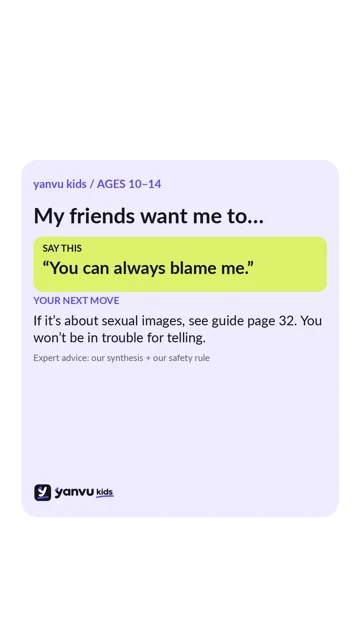
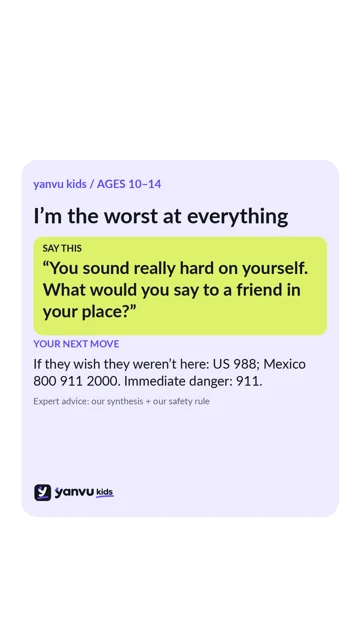
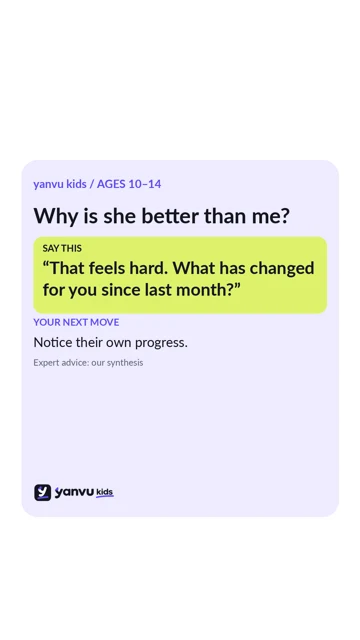
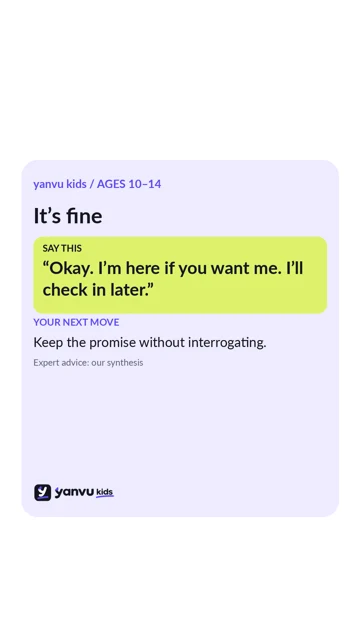
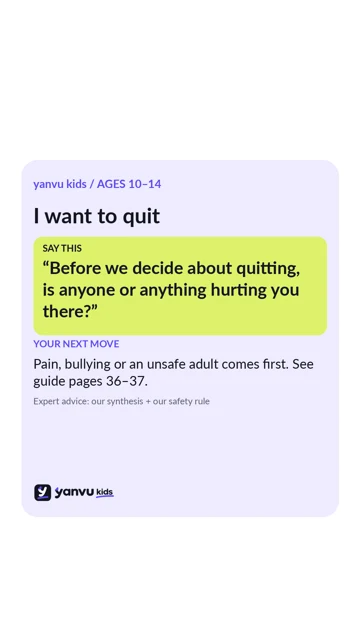
18 phone cards. Save the one you need.
Already said the wrong thing?
“Just ignore them.” “You’re the smartest kid I know!” If you’ve said these, you’re in good company. A difficult week is information, not a verdict.
- Lower your voice and give yourself a few seconds.
- Try a different first response: “Tell me what happened.”
- Make the next step smaller.
SAY THIS
“This is hard right now. It doesn’t tell us who you are.”
Practical words, not pep talks.
Not a journal. Not a subscription. Not affirmations. In long-term studies, self-esteem tends to rise and fall together with warm relationships. What you say and do is the part you control.
Research dataFindings from studies
Expert adviceGuidance or practical synthesis
Small or mixed evidenceLimits and uncertainty
What parents sayReported experiences
Most scripts are our advice, and no exact script has been tested on its own. We say so in the guide.
Independently created by Yanvu Kids. Not affiliated with or endorsed by any researcher, university or organization cited.

Made for real family life.
The parenting manual you never got at the hospital.
Short, practical guides for the parent who needs the next thing to say, not another parenting lecture.
Words, not labels.
Start with what your child is feeling.
Small steps, not promises.
Practical tools you can use tonight.
Transparent sources.
General education, not therapy.
Have the words ready.
COMPLETE DIGITAL KIT · AGES 3‑14
- 40-page guide for ages 3‑5, 6‑9 and 10‑14
- Words for 7 hard moments, from “Nobody likes me” to “I’m stupid”
- A 3-question check: teasing or bullying?
- Practice phrases for speaking up
- 12 printables, including a school letter template
- 18 phone cards to save for the next hard moment
No guide can make a child confident, popular or fearless.
14-day money-back guaranteeDigital download · No subscription
VISAPayPay 3D Secure
14-day money-back guarantee
What happens after you pay
01Pay once, $9
No subscription.
02Download your kit
PDF guide, printables and PNG cards.
03Start tonight
Open page 4 and save one card.
Frequently asked questions
I’ve read parenting books. How is this different?
It’s short and practical: exact words for 7 hard moments, by age, plus printables and phone cards.
Will this make my child confident?
No guide can promise that. It gives you words and small steps for the hard moments.
What ages is it for?
3 to 14, with words for ages 3‑5, 6‑9 and 10‑14.
My child is 13 and won’t talk to me.
There’s a section for ages 10‑14: going quiet, group chats, comparison and online safety.
Is my child being bullied?
The guide has a three-question check and a school letter template. If your child is hurt or threatened, adults act right away.
Is this for my child to read?
No. It is for you. A few printables are for doing together on paper.
Is this therapy or medical advice?
No. It is general education. For concerns about mood, safety or development, start with your pediatrician.
Is this based on research?
Some parts cite studies. Most scripts are our advice, and we say so.
Is it a subscription?
No, a one-time payment.
Can I use it on my phone or print it?
Yes. PDF guide, PDF printables and PNG phone cards.
What if it doesn’t help?
Contact us within 14 days of purchase for a full refund.
Next time they say “Nobody likes me,” you’ll have the words ready.
14-day money-back guaranteeDigital download · No subscription
VISAPayPay 3D Secure